Why is the Modern Education Landscape Focusing on Skills Alongside Subjects
posted on Jul 30, 2026
Real-world skills have become as important as conventional subject knowledge.
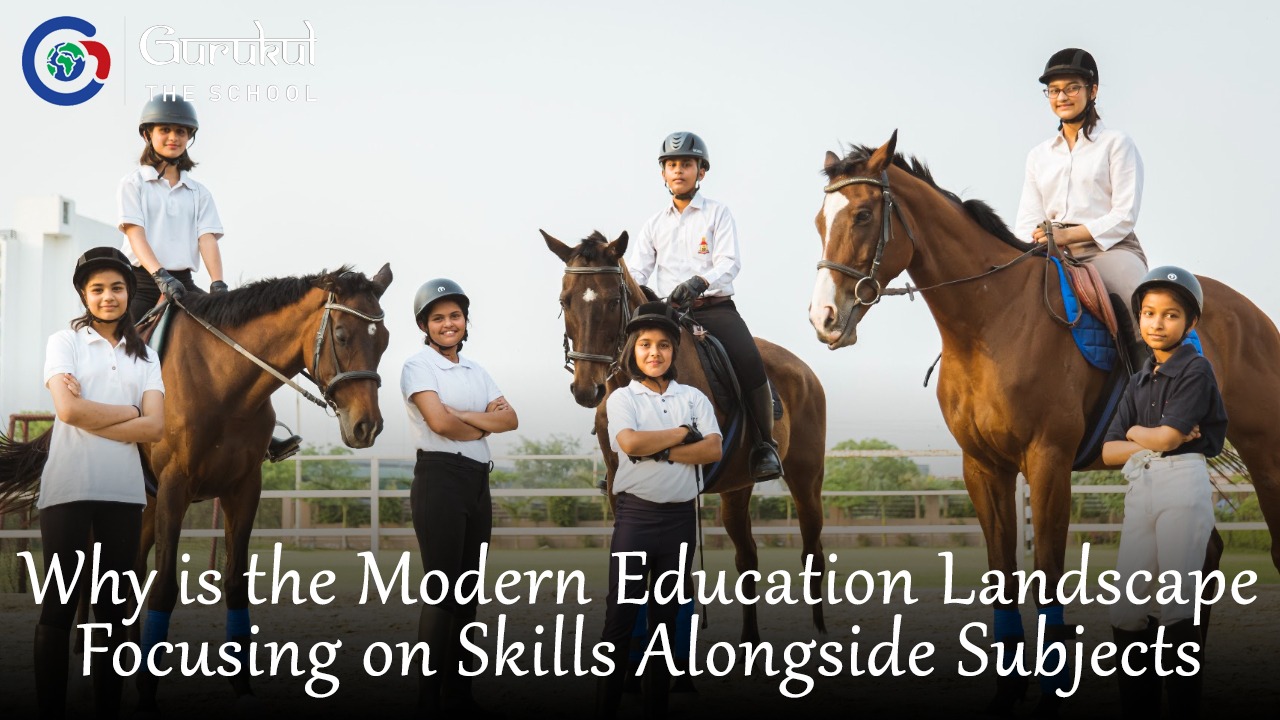
When people were busy exploring how technological changes have altered the way we work, the educational landscape got silently transformed in every aspect. So, if you are a parent, just take a quick look at your child’s school curriculum or converse with them about their everyday school activities, and you’ll instantly notice how much modern education has changed in recent years.
In this regard, we at Gurukul The School, regarded as the noi, believe that while subject mastery and conceptual understanding are still crucial parts of students’ learning journey, they’re no longer enough. Real-world skills have become as important as conventional subject knowledge. If you’re curious why the modern education landscape is focusing just as much on skill development as it does on subject knowledge, then the following points will help clear your doubts.
- Academic knowledge isn’t sufficient to attract future success
A few decades ago, you could secure a seat in a top university for higher education or get a lucrative job based on subject knowledge alone. However, both universities and employers now prefer individuals who possess real-world skills and subject knowledge. They’re now prioritising individuals who can think independently, communicate ideas, solve unfamiliar problems, and work effectively with others.
It’s a key reason why we at Gurukul The School follow a pedagogy that nurtures these skills in children from a young age. In fact, even our pre-primary students are made to participate in thoughtfully planned experiences that help develop their early problem-solving, coordination, self-regulation, and other crucial skills.
- The nature of work is changing faster than the school curricula can
School syllabi are updated periodically, but industries are evolving almost continuously because of Artificial Intelligence (AI), automation, and digital innovation.
Since no curriculum can keep pace with every emerging profession, modern schools have started focusing on teaching students how to learn anything, rather than just following what to learn.
Modern schools have integrated research projects, design challenges, coding activities, and experiential learning into their curriculum so students can gradually develop the key skills. Collectively, these activities help students develop skills such as curiosity, resilience, critical thinking, adaptability, collaboration, problem-solving, and more.
All these skills enable students to learn new technologies and acquire new competencies throughout their careers. It will help them remain relevant in a constantly changing job market.
- Employers increasingly value human skills that AI cannot easily replace
With so many AI applications present today, anyone can retrieve information, analyse data, and automate repetitive tasks. However, they cannot rely on machines for empathy, ethical judgment, leadership, creativity, and interpersonal communication.
All these skills are uniquely human. Recognising this, we at Gurukul The School, one of the top CBSE schools in Ghaziabad, have already started nurturing these skills in our students using a combination of activities, such as debates, group discussions, peer mentoring, and student leadership programs.
We firmly believe that such skills will not only improve employability, but will also help our students improve their overall lives.
- The focus has moved beyond preparing students for examinations alone
The 21st century is witnessing a notable shift in parental expectations as well. Parents now expect schools to prepare children for adulthood, for real life, and not just for exams. Hence, schools nowadays are altering their curriculum and pedagogy to include activities that will help students make responsible decisions, adapt to setbacks, and communicate effectively.
For instance, at Gurukul The School, we include activities like simulations, entrepreneurship programs, collaborative activities, and reflective learning opportunities to help develop the necessary skills in our students. We are very much certain that with regular participation and exposure to such activities, students will eventually develop skills that make them capable enough to navigate both personal and professional challenges confidently.
Frequently Asked Questions (FAQs)
- Does academic knowledge not have enough value in the modern education landscape?
It does still hold immense value, but modern education prioritises both academic knowledge and skill development equally so that children can thrive in all areas of their lives.
- Which skills are considered the most important in the modern education landscape?
Although numerous skills are regarded as important, the most crucial ones include critical thinking, communication, collaboration, problem-solving, and creativity.
- Can a student develop skills without compromising on academic learning?
Yes, they can. In fact, both go hand-in-hand. The best schools carefully pick a combination of thoughtful activities that help students gain subject mastery, alongside developing real-world skills.
Conclusion
The modern education landscape may not resemble the old ways of learning because it’s preparing students for a new world. It realises that students cannot rely on subject knowledge alone. And this is the key reason why the best CBSE schools, such as Gurukul The School, focus greatly on developing real-world skills alongside sharpening students’ conceptual clarity, so that they become indispensable in today’s evolving world. If you are also a parent looking for a school for your child where they are not only prepared to excel academically but are also instilled with all the necessary skills to do well in real-life, consider enrolling them at Gurukul The School, the best school in Ghaziabad.